
Body corporate & strata structural inspections in Gold Coast
Protect your shared building, before small cracks become special levies.
Targeted defect inspections, balcony failure investigations, insurance renewal reports, and basement water ingress assessments — RPEQ-certified, for strata committees and managers across the Gold Coast.
Written so a committee, manager, and insurer can all act on the same findings — no jargon, no guesswork.
Structural services built around common-property risk.
From a single reported crack to a full common-property condition assessment ahead of a maintenance plan.
Targeted Defect Inspections
A focused inspection of a specific reported issue — a crack, stain, or movement — rather than a full building audit, when the committee already knows where to look.
Balcony Failure Mechanisms
Investigating cracking, spalling, delamination and waterproofing membrane failure in balconies and balustrades, and identifying the underlying cause.
Insurance Renewal Support Reports
Independent structural condition reports prepared to the level of detail insurers and brokers expect at renewal, especially for older buildings or flagged defects.
Basement & Suspended Slab Water Ingress
Assessing cracking and water ingress in basement retaining walls and suspended slabs, commonly caused by membrane breakdown or inadequate drainage falls.
Common Property Condition Assessments
Periodic structural condition assessments of common property, giving committees the evidence base for long-term sinking fund and maintenance planning.
Defect Reports for Disputes & Rectification
Independent technical evidence supporting body corporate disputes with builders, or claims made within a statutory defect liability period.
Common structural issues in strata buildings.
Select an issue to see what's usually behind it, and why it matters for your body corporate.
Waterproofing membrane failure under tiles
Hollow-sounding tiles, hairline cracking along balcony edges, or efflorescence beneath a balcony often point to a failed waterproofing membrane letting water track into the slab below.
Reading the pattern before assuming the worst
Not every crack is structural — shrinkage cracking is common and usually cosmetic. Diagonal stepped cracking, or cracks that are widening, are the ones that warrant a proper structural assessment.
Basement walls & suspended slabs
Damp patches, staining, or active seepage in basement car parks and below-grade walls are usually caused by hydrostatic pressure, membrane breakdown, or inadequate drainage falls — not always a simple blocked drain.
Rust-stained concrete and exposed steel
Rust staining, cracking along a straight line, or concrete spalling away from a surface usually signals embedded reinforcement corroding and expanding — most common in balconies, carparks, and coastal buildings exposed to salt air.
Doors, windows, and floors out of alignment
Sticking doors, sloping floors, or cracking that follows a consistent direction across multiple levels can indicate differential settlement of the building's foundations.
Does your building need an inspection?
Tick anything a resident, manager, or committee member has reported in the last 12 months.
Tick the items that apply to see how urgent an inspection is likely to be.
Call 0499 887 867From first call to a report your committee can act on.
Initial consultation
We talk to the committee or manager about what's been reported, and what the report needs to support — repair, insurance, or dispute.
Site inspection
An engineer inspects the affected areas, documents visible defects, and investigates the likely cause.
RPEQ-certified report
Findings, cause, and risk level are set out in a clear written report your committee, insurer, or builder can act on.
Ongoing support
We're available to answer questions at AGM, liaise with insurers or builders, and re-inspect if repairs are monitored over time.
Real strata & common-property investigations.
Failure to Achieve Dry Basement Car Park in a High-Rise Building with Contiguous Pile Retention System
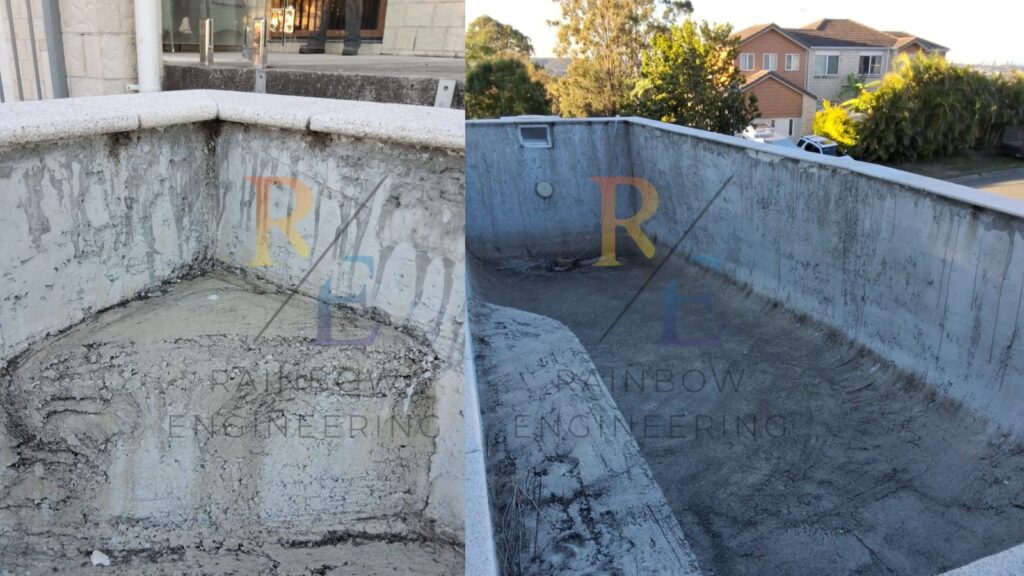
Assessment of a Non-Compliant Reinforced Concrete Swimming Pool with Cantilevered Retaining Wall
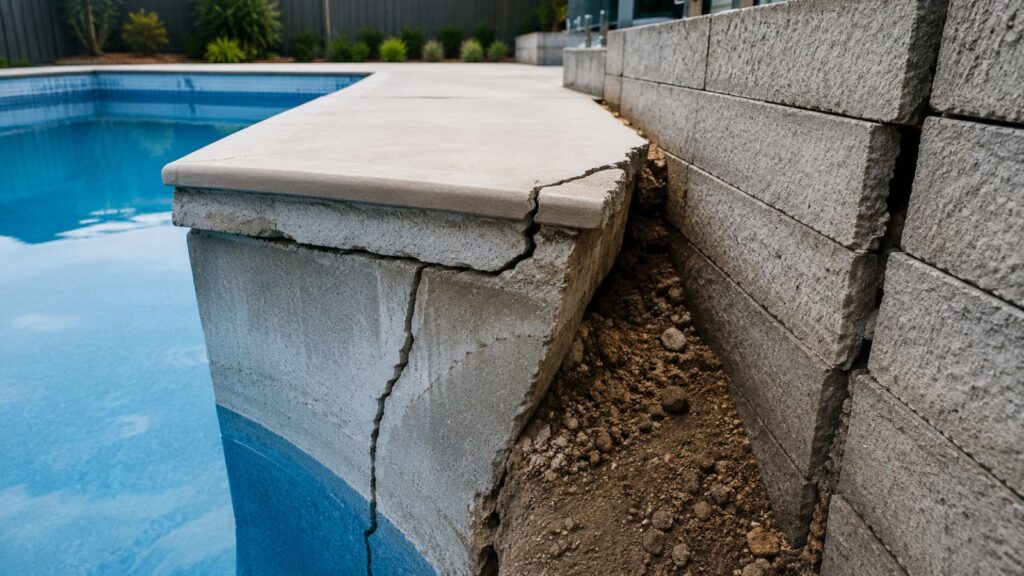
Retaining Wall Constructed Adjacent to a Concrete Swimming Pool Shell with Bonded Pool Surrounds
Body corporates across the Gold Coast.
What clients say about Rainbow Engineering.
Common questions from strata committees.
Under most strata legislation, the body corporate is responsible for maintaining common property in good condition, including structural elements. In practice, the committee or the strata manager usually engages a structural engineer once a defect is reported, flagged by an insurer, or identified during routine maintenance planning.
A targeted defect inspection of specific areas — such as one balcony or a section of basement wall — is usually completed on site in a few hours. A full common-property condition assessment across a larger complex takes longer, depending on the number of buildings, levels, and access points involved.
Yes. We prepare structural condition reports specifically to support insurance renewal or underwriting requirements, documenting the current condition of flagged elements, the likely cause of any defects, and whether they present an immediate structural risk.
A full inspection reviews the structural condition of a whole building or common property area. A targeted defect inspection focuses only on a specific reported issue — such as a cracked balcony slab or water ingress in a basement wall — which is faster and more cost-effective when the committee already knows where the problem is.
Yes. Basement walls, suspended slabs, and car park structures are common areas we assess for cracking, water ingress, and waterproofing membrane failure, particularly in buildings with below-ground or partly below-ground parking.
Yes, our structural reports are prepared and certified in accordance with Registered Professional Engineer Queensland (RPEQ) requirements, so they can be relied on for insurance, dispute, and regulatory purposes.
Report a defect, or get ahead of your next AGM.
Fill out the inquiry form or call us directly, and our team will get back to you.