

Project Overview
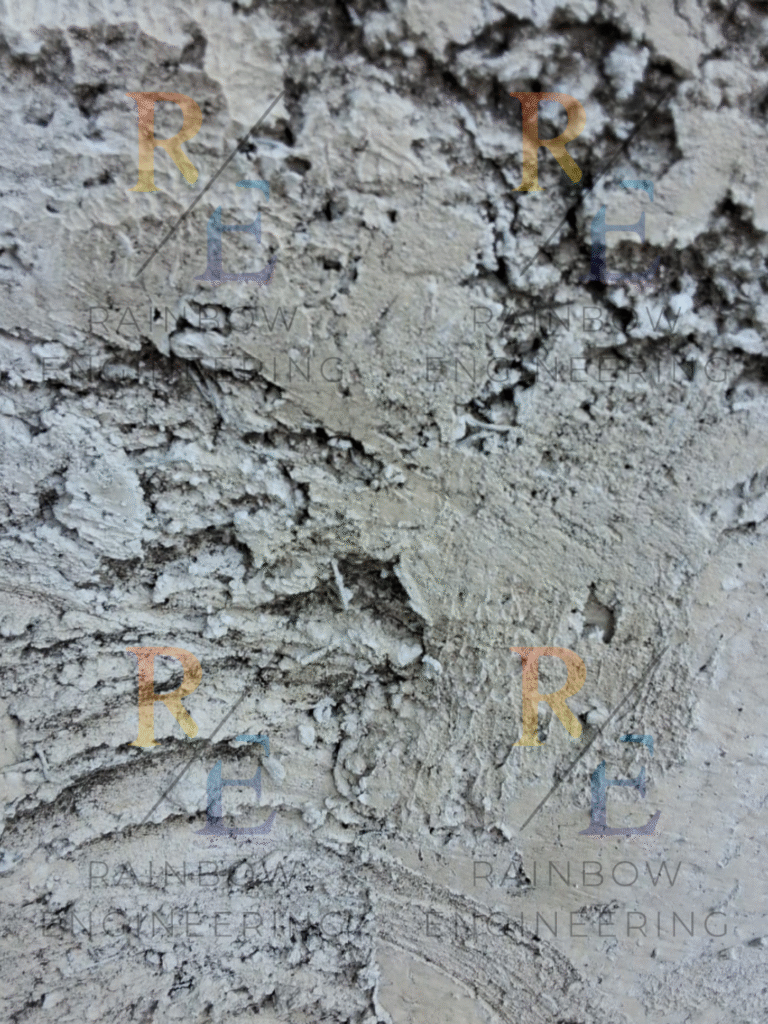
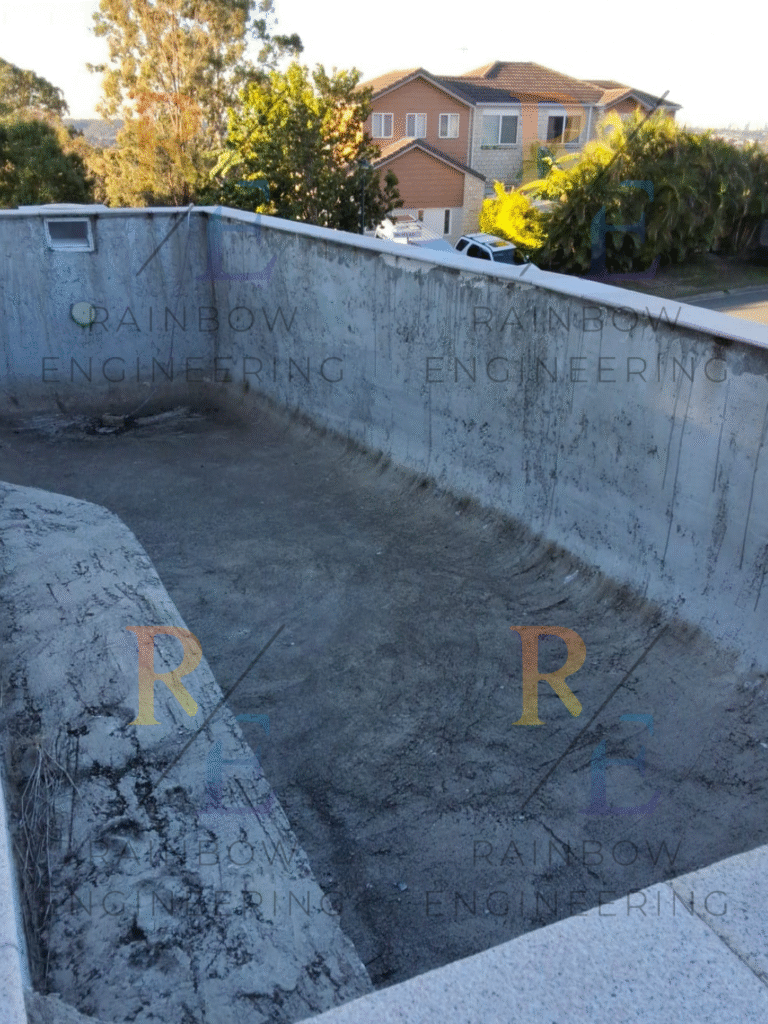
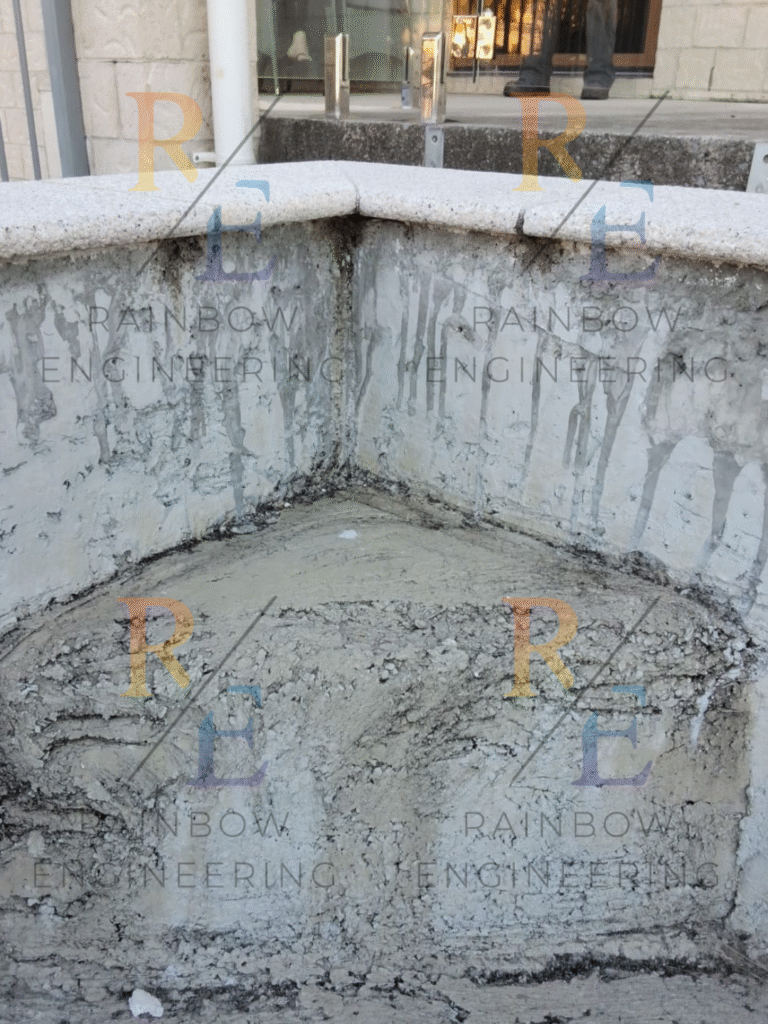
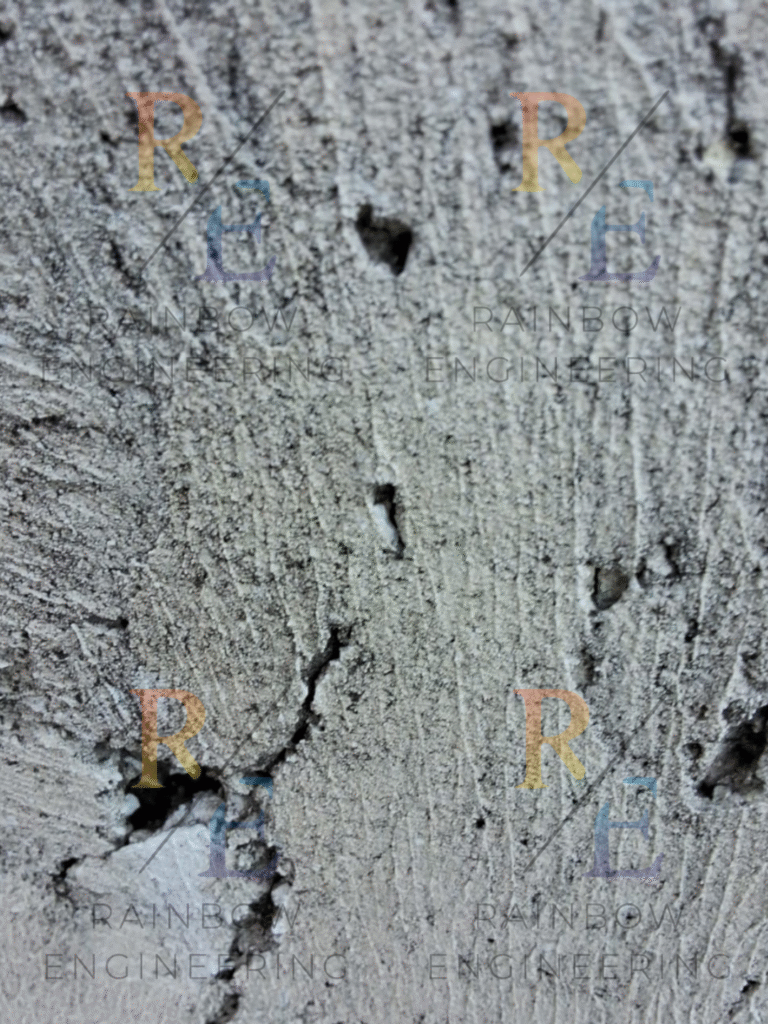
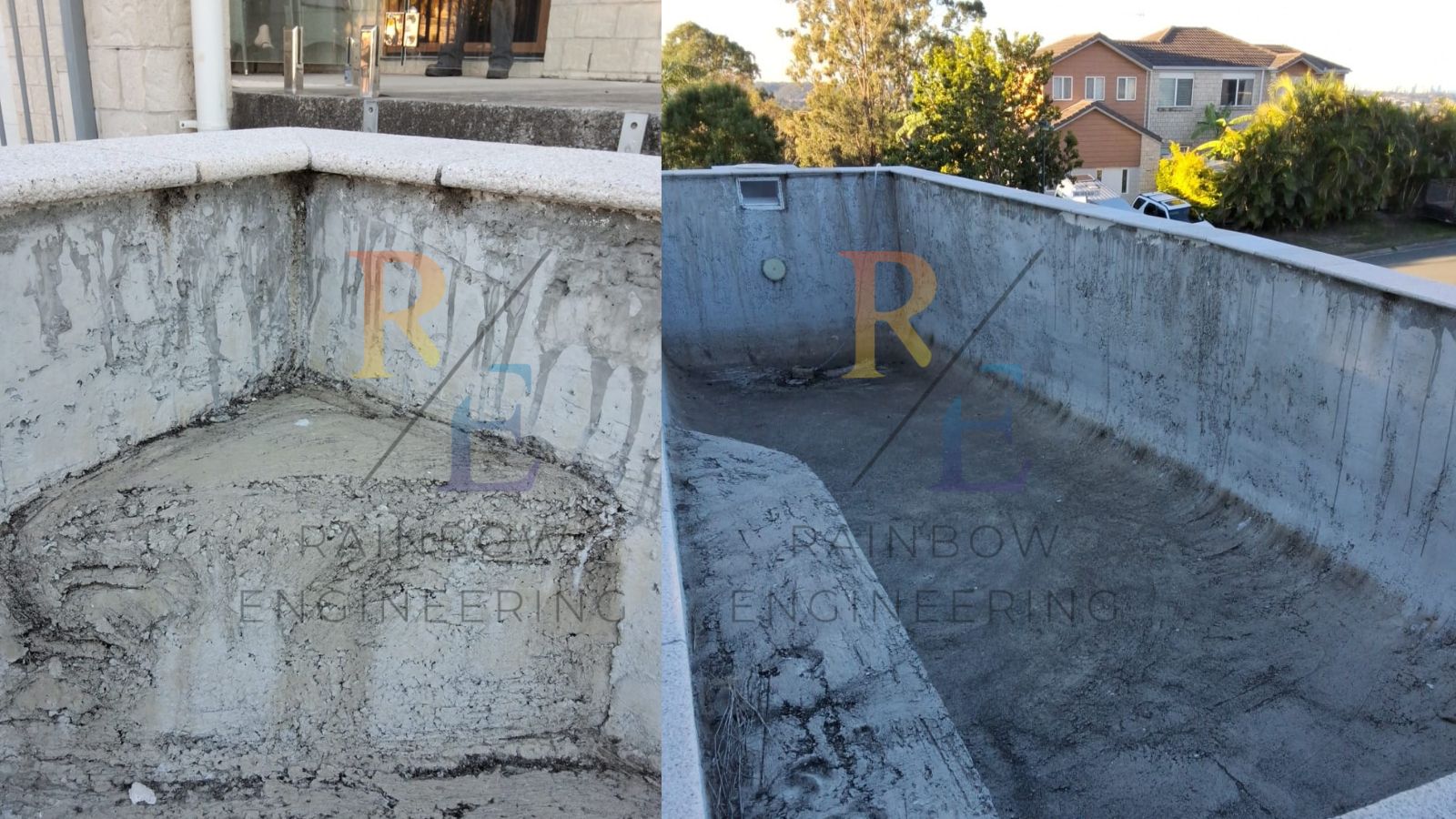
A structural assessment was undertaken for an existing in-ground reinforced concrete swimming pool following concerns regarding the structural adequacy of the pool shell and surrounding retaining walls. The pool had remained empty for an extended period and exhibited signs of deterioration and construction deficiencies.
The primary concern related to the rear cantilevered pool wall, which was retaining surrounding soil while unsupported internally due to the absence of hydrostatic water pressure.
The inspection identified several structural and serviceability issues requiring further investigation and engineering assessment.
Existing Conditions
The existing pool comprises reinforced concrete walls and floor slab with an elevated cantilevered rear wall acting as both the pool wall and retaining structure.
Visual inspection identified:
- Significant surface weathering and concrete deterioration.
- Localised cracking and staining along the cantilevered wall.
- Evidence of prolonged exposure without water.
- Surface delamination and degradation of internal finishes.
- No available structural documentation confirming reinforcement details or original engineering design.
The pool shell appeared to have been constructed to retain external soil loads; however, the cantilevered wall geometry results in increased bending moments compared with conventional pool wall construction.
The absence of water within the pool significantly alters the design loading condition by removing the internal hydrostatic pressure that ordinarily counteracts external earth pressures.
Structural Concerns
From a structural engineering perspective, the following concerns were identified.
1. Cantilever Wall Behaviour
The rear pool wall functions as a cantilever retaining wall subjected to lateral earth pressure.
Where the pool remains empty, the wall experiences:
- Full active earth pressure.
- Potential surcharge loading from adjacent structures and landscaping.
- Differential moisture conditions.
- Increased flexural demand.
Without balancing hydrostatic pressure from the pool water, tensile stresses within the wall increase substantially, potentially exceeding the original design assumptions.
2. Durability
Surface deterioration suggests long-term moisture ingress and weathering.
Possible deterioration mechanisms include:
- Carbonation of concrete.
- Reinforcement corrosion.
- Shrinkage cracking.
- Freeze-thaw degradation (where applicable).
- Chloride contamination from previous pool operation.
These mechanisms may reduce the effective structural capacity of the reinforced concrete over time.
3. Structural Documentation
No engineering drawings or reinforcement schedules were available during the assessment.
Accordingly, reinforcement detailing, concrete strength and footing dimensions could not be verified.
The existing construction therefore cannot be confirmed as compliant with the applicable structural design standards without further investigation.
Engineering Assessment
Based on the visual inspection, the existing structure cannot presently be verified as structurally compliant.
The cantilevered wall is considered the critical structural element due to its role as a retaining structure and its dependence upon balanced loading conditions.
The observed deterioration, combined with the absence of engineering documentation, introduces uncertainty regarding:
- Reinforcement adequacy.
- Concrete strength.
- Wall stability.
- Long-term serviceability.
- Ultimate structural capacity.
Recommended Investigation
Further investigation should include:
- Concrete cover survey.
- Reinforcement scanning using Ground Penetrating Radar (GPR) or Ferroscan.
- Concrete compressive strength testing.
- Crack mapping and monitoring.
- Assessment of reinforcement corrosion.
- Geotechnical review of retained soils.
- Structural analysis of the cantilever wall under current loading conditions.
Where deficiencies are confirmed, strengthening or reconstruction may be required.
Engineering Opinion
Based on the available information and site observations, the existing swimming pool cannot presently be certified as structurally compliant.
The cantilever retaining wall represents the principal structural risk due to sustained lateral earth loading in the absence of internal hydrostatic pressure.
Until the structural capacity of the wall has been verified through detailed investigation and engineering assessment, the structure should be regarded as non-compliant with accepted engineering practice.
Any proposed reinstatement of the pool should be preceded by a comprehensive structural assessment to confirm the adequacy of the existing reinforced concrete shell or determine the extent of remedial works required.